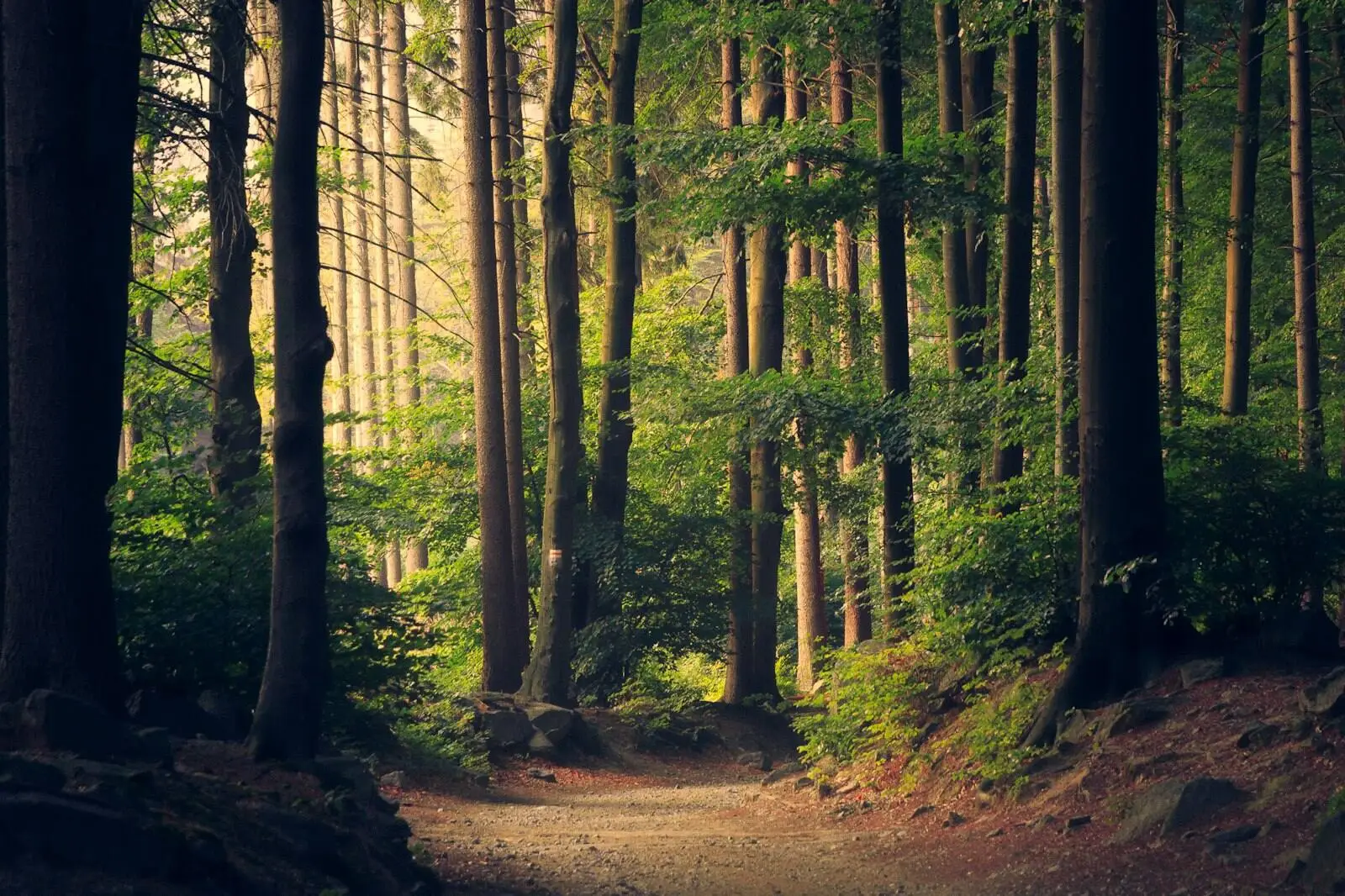
How your job works
From your first call to the final settlement, we guide you through every step. Especially if it is your first time having timber felled, you will know exactly what to expect.
From your first question to the final invoice
Never had timber felled before? No problem. Here is how a job works with us, explained clearly and without jargon.
Your call
You call us and briefly explain what it is about: which piece of forest, roughly how much timber and where it is located.
On-site inspection
Rudi Hochstöger looks at your stand in person: tree species, volume, access and terrain. That is how everything can be assessed properly.
Quote and price agreement
You receive a non-binding quote for the felling. Everything is discussed openly before a single tree comes down.
Registering the standing sale
If you want to sell the timber, the sale of the standing timber is registered with the buyer. What is sold is the timber just as it stands in the forest.
The buyer inspects and sets the price
The buyer, for example a co-op depot or sawmill, looks at the stand and names their price for the timber.
Contract
If everything fits, the timber contract is concluded with the certified buyer. That makes the terms clear for everyone.
Felling and forwarding
We fell fully mechanised with the harvester or motor-manually with the chainsaw and bring the timber right up to the forest road.
Collection by the buyer
The buyer collects the finished timber from the forest road. You do not have to worry about transport from the road onwards.
Volume and settlement
Billing is based on solid cubic metres, measured at collection by the buyer. You keep track of the actual volume.
What is helpful to know beforehand
You do not have to prepare anything for a first chat. A few details do help us assess your stand more accurately, though. Here is what is useful to have to hand.
Access and forest road
How do you get to your forest? Is there a forest road or a firm access route nearby? That helps decide how we fell and bring the timber out to the road.
Boundaries of the stand
It helps if you roughly know where your forest begins and ends. If not, that is something we look at together during the site visit.
Volume and tree species
A rough idea is enough: approximate area, spruce or mixed stand, thinnings or heavy timber. The details become clear on site.
Allow some time
Our work is seasonal and weather-dependent. With around 7 working days of lead time from your go-ahead, we stay flexible and find a date together that suits your forest and the weather.
The site visit is non-binding
The call and the site visit cost nothing and commit you to nothing. You do not have to prepare anything you do not already know. A short call is enough, and we sort out the rest together on site.
How you can prepare for the harvest
Once the date is set, a few small steps help the felling and forwarding run quickly and cleanly. None of it is strictly necessary, but all of it helps.
Access for the harvester
Keep the forest road or a firm access route as clear as possible. The harvester and the forwarding need a way into the stand and room to stack the timber at the road.
Boundaries and neighbouring trees
Show us or mark the property boundaries and any individual boundary trees. That keeps it clear what gets felled, so the trees that belong to your neighbours stay standing.
Extraction lanes and assortments
Do you have wishes about the extraction lanes or the assortments, such as saw logs, pulpwood or firewood? Mention them beforehand and we take them into account from the start.
Inform neighbours and access
If the access runs over land that belongs to someone else or over a shared track, it is best to tell the neighbours in advance. That saves questions while the machines are running.
Still unsure which method suits your stand, or how things work with damaged timber? Read on here:
Scheduling, season and the time after the harvest
Timber harvesting is work with heavy machinery and depends heavily on the season and the weather. Those who plan early are more likely to get their preferred date and a forest that is left tidy after the job.
Allow lead time
After your go-ahead, we plan for around 7 working days of lead time until the machines are in your forest. So get in touch in good time, before it becomes urgent.
Season and weather
Our work is seasonal and weather-dependent. Frozen or dry ground protects the forest floor; in wet weather or storms we would rather wait than risk deep ruts.
After the harvest
We leave tidy extraction lanes and a drivable stand behind. On the cleared areas, replanting or natural regeneration gets the next forest going again.
What the harvest costs roughly, and when we can come, is something we are happy to clarify in advance:
Let us talk about your forest
A short phone call is all it takes to work out how we can help. Rudi Hochstöger is happy to look at your stand with no obligation.